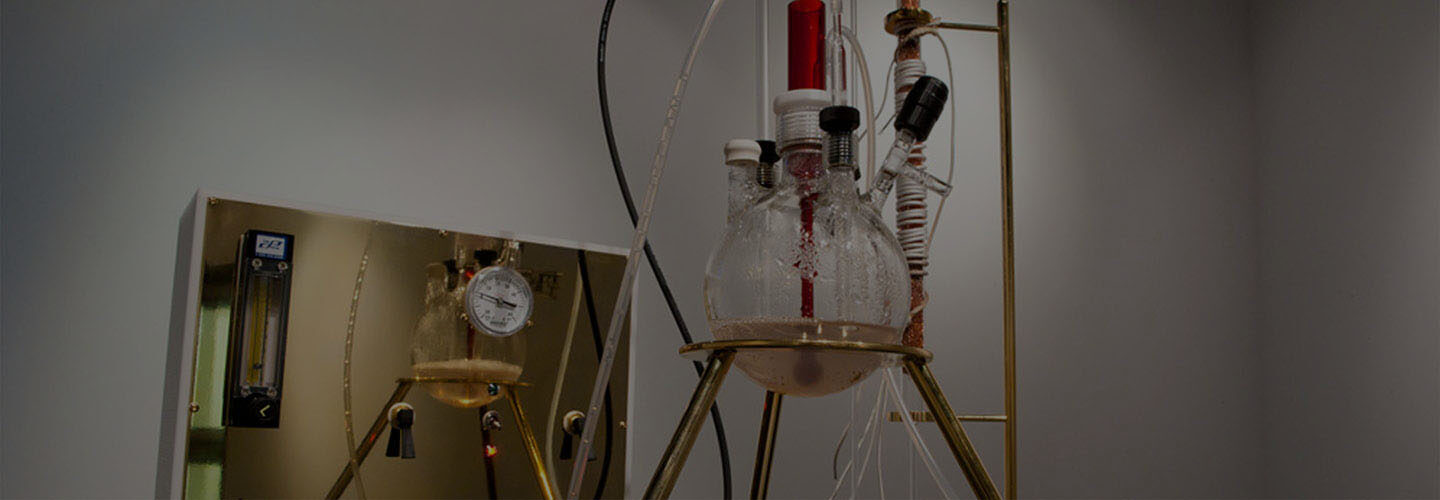
I work as a neo-alchemist—not in pursuit of gold, but in pursuit of unearthing.
Alchemy was the first discipline to understand matter as alive, porous, and capable of transformation. My practice extends this lineage into the 21st century, working with the materials and ecologies shaped by extraction, toxicity, and industrial memory. In my studio and laboratory, alchemical operations become contemporary research methods: calcination becomes smelting and pyrolysis, coagulation becomes precipitation chemistry, fermentation becomes microbial metallurgy, and projection becomes the creation of images through toxic residues.
I am drawn to materials that speak. Pigments, ores, industrial wastes, and microbial cultures carry deep historical, symbolic, and ecological narratives. Stamp sands, arsenic pigments, radioactive isotopes, bone ash, rust, and microbial minerals are not passive substances but agents of testimony. They reveal the entanglement of color with colonial expansion, of industrial chemistry with environmental collapse, and of scientific objectivity with power.
By transforming these materials—growing mineral forms, synthesizing pigments, amplifying the subsonic acoustics of abandoned mines, cultivating hyperaccumulating plants, or staging chemical reactions directly onto photographic emulsions—I make visible what is usually hidden: the toxic afterlives of industry, the interdependence of biological and geological processes, and the ways in which matter archives violence.
My work occupies the threshold between art and science, not to illustrate scientific knowledge but to unsettle it. I use the laboratory as an alchemical vessel, a crucible where materials are not merely analyzed but invited to transform, resist, collaborate, and reveal their own agency. Through these transformations, I seek forms of knowledge and aesthetic experience that cannot be accessed through science or art alone.
As a neo-alchemist, my goal is not purification but understanding. An understanding forged through the slow, attentive, and often unpredictable processes of working with volatile, toxic, and living matter. Each project is an act of transmutation: a negotiation with matter in which the material, the ecological, and the conceptual become inseparable.
Adam W. Brown
email: brown293@msu.edu